Naval High Command Buy the book $47
The U.S. Navy · 1941–1945 · An illustrated history

The Machine
That Sank Japan

How America Out-Built, Out-Supplied and Out-Thought the Imperial Navy

Japan had the better torpedo, the better night optics and navy pilots who averaged 650 hours before combat. It lost anyway, to shipyards, engines, training pipelines, Seabees, codebreakers, oilers, repair docks and submarines. This is the story of that machine.

382 pages · PDF, EPUB and Kindle · instant download · no DRM
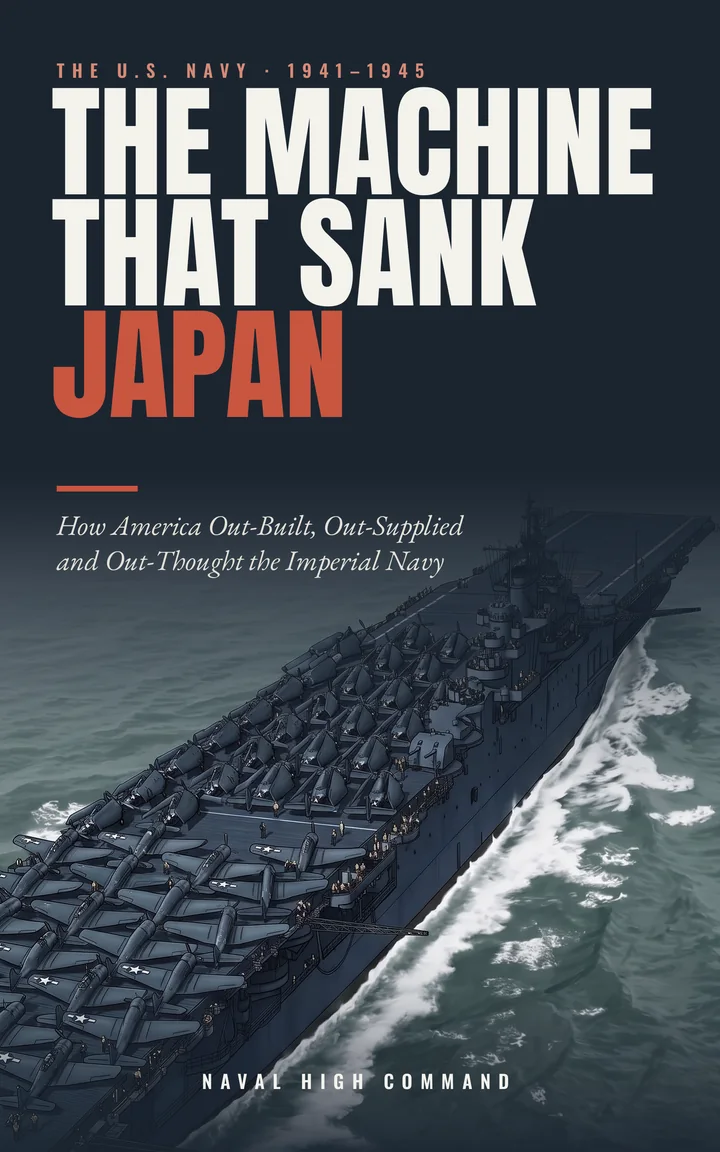
The Machine That Sank Japan, by Naval High Command: book cover showing the carrier Essex at sea
The production race

One hundred and two to fifteen

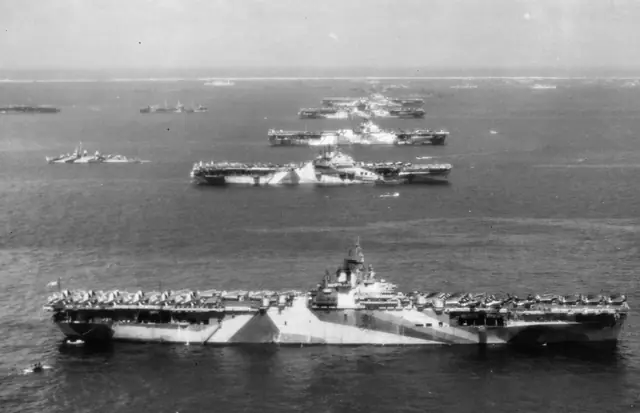
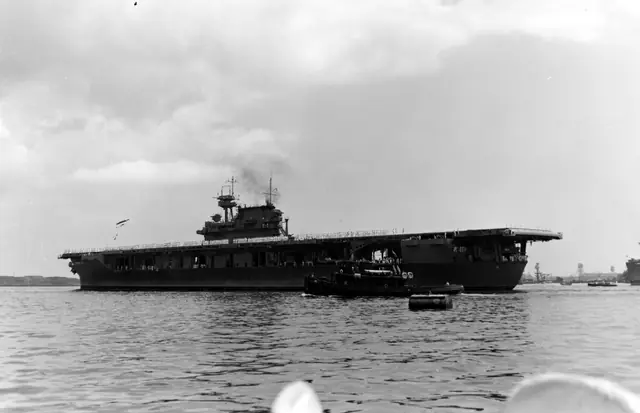
Between Pearl Harbor and the surrender, the U.S. Navy commissioned 102 aircraft carriers. Japan completed 15.

Seventeen of America’s were big Essex-class fleet carriers, more than Japan built of every kind. The U.S. Navy took delivery of more airplanes than Japan’s army and navy built together, and grew from 790 ships to 6,768. The book explains how, one part of the machine at a time.

United States 102

Aircraft carriers of all types commissioned by the U.S. Navy, or completed by Japan, December 7, 1941 to September 2, 1945. From the hull-by-hull lists in the book’s Appendix A.

What the book argues

Not braver men. A better machine.

Each part of the American machine was ordinary on its own, and some parts failed badly before they worked. The Mark 14 torpedo ran deep and failed to explode for twenty-one months. Together, though, they let the United States replace losses faster than Japan could inflict them, stay at sea for months, see and hit in the dark, and finally choose where to fight.

The book is calibrated, not cheerleading. It names American failures and Japanese strengths, and puts every number on its counting basis.

Myths it corrects
  • “Five minutes” at Midway. Fuchida’s famous story of a Japanese strike about to launch is set aside for the record.
  • The Zero that “created” the Hellcat. The calendar says otherwise: the first Hellcat flew fourteen days before the Zero was found.
  • Rochefort “cracking the code.” HYPO read a fraction of Japan’s naval code, and that was enough.
  • Japan never understood its shipping losses. Its own admirals did, and said so to American interrogators in 1945.
Inside the machine

Twelve chapters, four parts

Look inside

Designed like a great illustrated history

Real pages from the book. Click any page to see it larger.

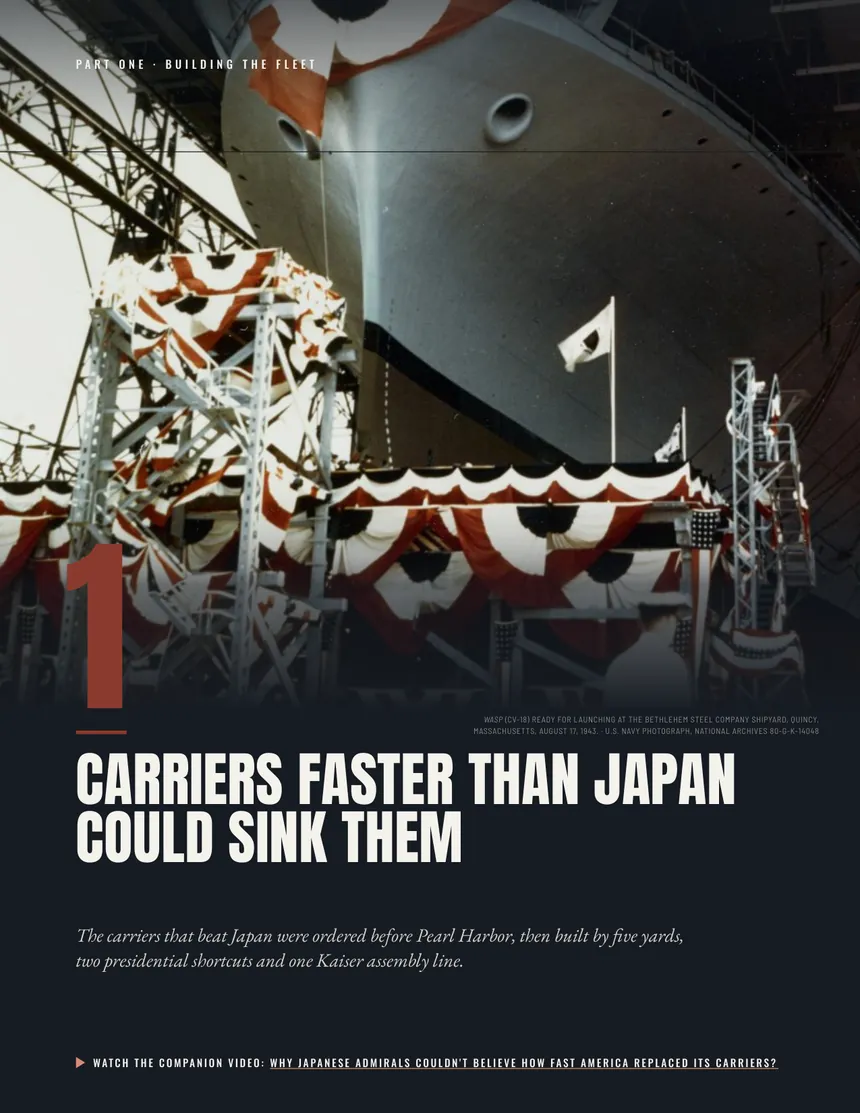
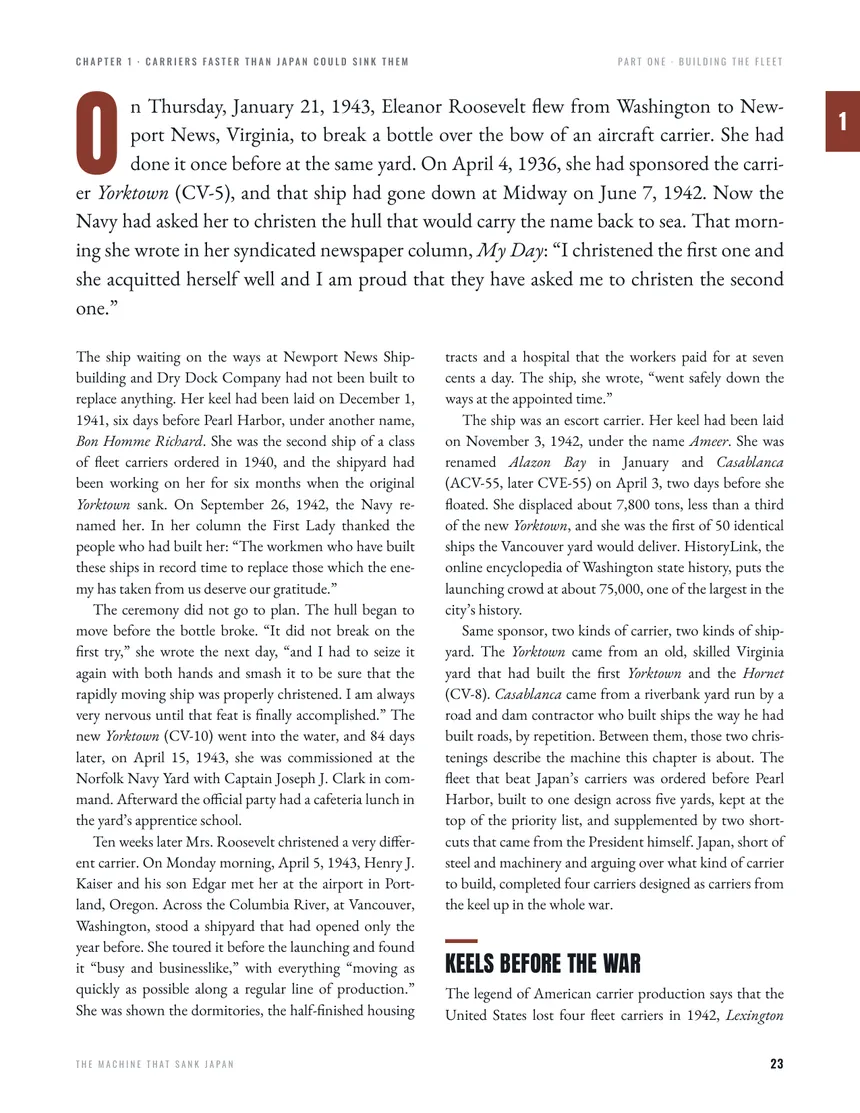
Every chapter opens on a full-page archival photograph.
A two-column illustrated layout, with captions taken from each photograph’s archival record.
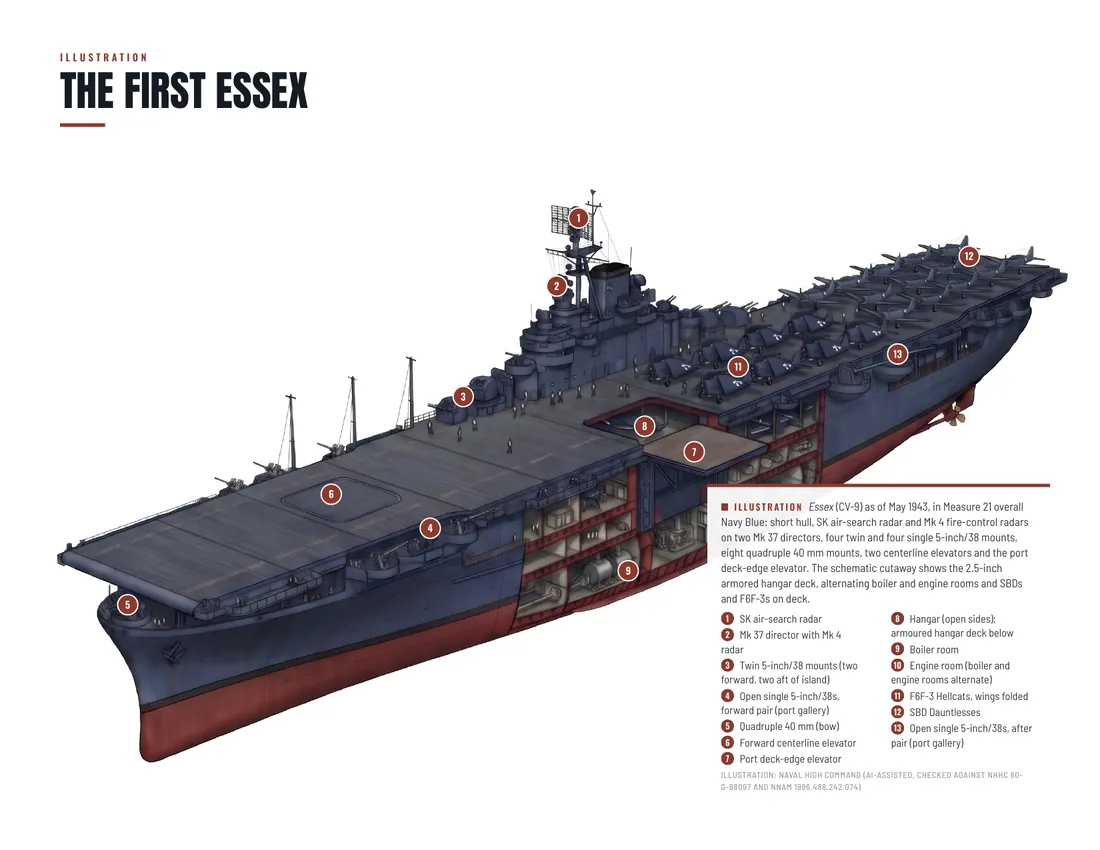
Signature illustration plates: here, Essex (CV-9) as of May 1943, cut away and keyed.
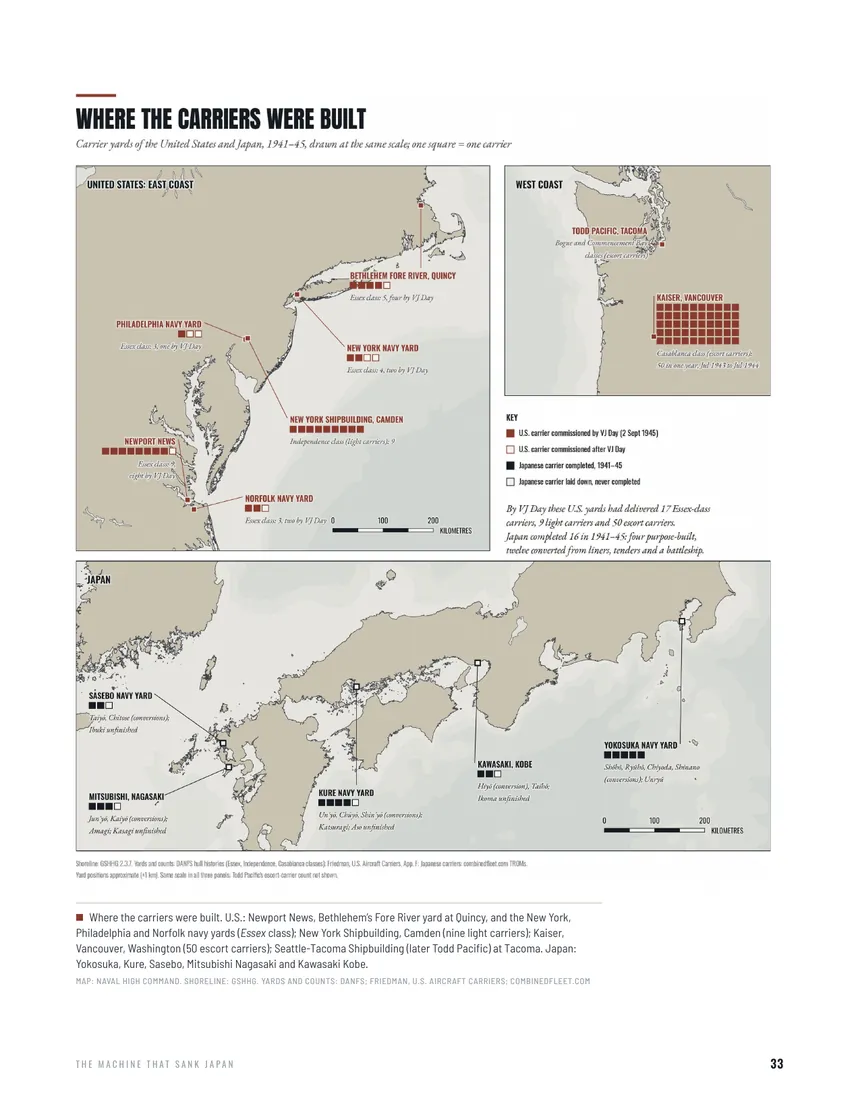
Maps drawn from real geographic data. This one shows where the carriers were built.
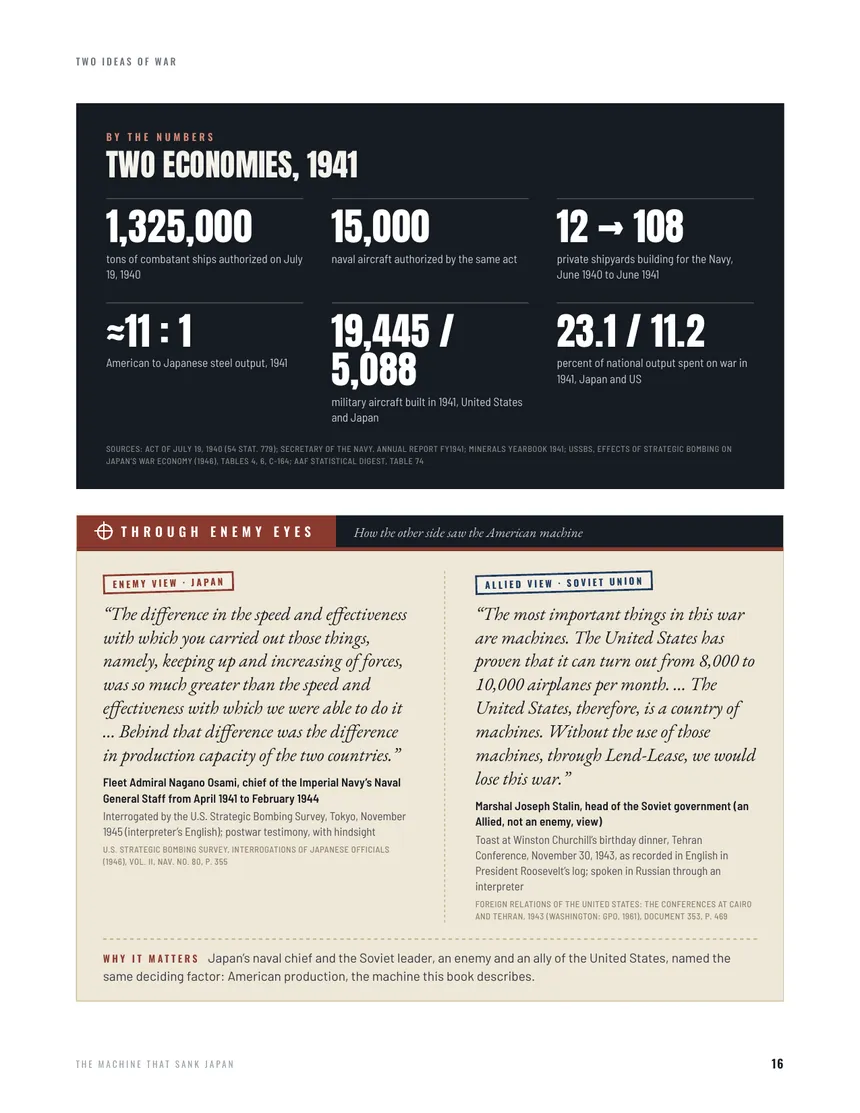
“By the numbers” panels and the “Through Enemy Eyes” sidebar in every chapter.
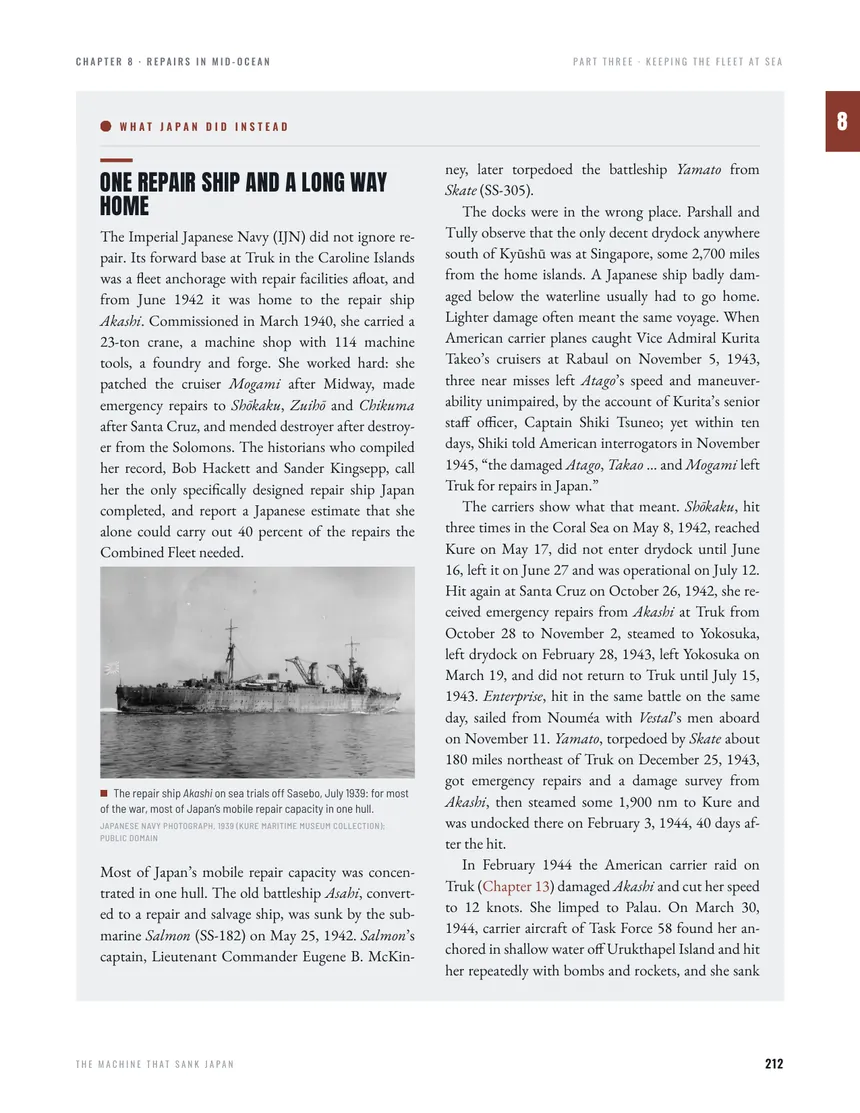
“What Japan did instead”: the other side of every part of the machine.
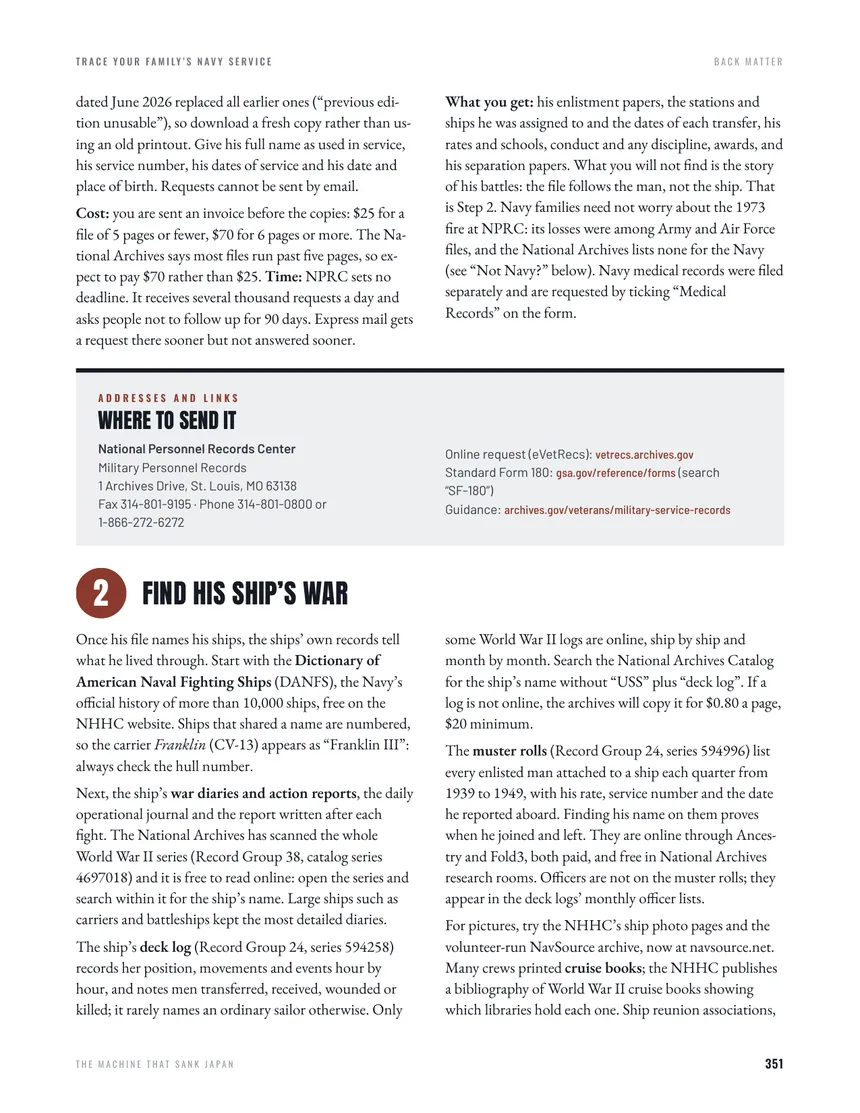
Appendix C walks readers through finding a relative’s Navy service record.
In every chapter

Through Enemy Eyes

The machine impressed everyone who ran into it. Every chapter carries a sidebar of what the other side said about it, word for word, with its source.

  • Japanese admirals interrogated by the U.S. Strategic Bombing Survey in 1945
  • Admiral Ugaki’s wartime diary, written as the war went on
  • The Zero’s designer, on the Hellcat
  • Germany’s naval attaché in Tokyo, the U-boat Command’s war diary, Dönitz and Göring
Through Enemy EyesHow the other side saw the American machine
Enemy view · Japan
“Behind that difference was the difference in production capacity of the two countries.”
Fleet Admiral Nagano Osami, chief of the Imperial Navy’s Naval General Staff, 1941–44
Interrogated by the U.S. Strategic Bombing Survey, Tokyo, November 1945 (interpreter’s English)
Enemy view · Germany
“The Americans are superior technically and in production.”
Reich Marshal Hermann Göring, commander in chief of the Luftwaffe
Questioned by Gen. Carl Spaatz and other American officers, Augsburg, May 10, 1945
Appendix C · included free

Trace your family’s Navy service

Did your father or grandfather serve at sea? The book shows how to find his record and his ship’s war, in the same archives it was written from.

  1. Order his personnel file from the National Personnel Records Center: what to send, what it costs, what comes back.
  2. Find his ship’s war in the free war diaries and action reports, the deck logs and the crew lists.
  3. Decode his paperwork: rates, stations and abbreviations, explained.
  4. Claim his medals, and keep it all on a printable worksheet.
Is his ship in the book?

Search 204 ships

Type a ship’s name or hull number, such as Yorktown or CV-10.

    What you get

    The complete book, every format

    • PDFThe full illustrated edition, 382 pages, with bookmarks and a clickable table of contents. Best on a tablet or computer.
    • EPUBFor Apple Books, Kobo, Google Play Books and other e-readers.
    • Kindle EPUBA smaller file sized for Amazon’s Send to Kindle.
    • Bonus guide“Trace Your Family’s Navy Service” as its own PDF, to print or share with relatives.
    • Map packAll 24 maps and 15 diagrams as high-resolution images.
    • VideosEvery chapter linked to its companion documentary on the Naval High Command channel.
    How it was made

    Sourced, then checked again

    Official records first: the Navy’s ship histories, Bureau of Ships war damage reports, the Strategic Bombing Survey and its interrogations, the postwar count of Japanese ships sunk, the official history of the fleet train, and the action reports. Then the historians who worked closest to those records.

    Independently fact-checked. Reviewers who did not write the chapters re-checked every hull number, date, rank, figure, quotation and caption, and every error they found was corrected before release. Where good sources disagree, the book gives both figures and says what each one counts.

    No invented quotations. Every statement in the book, including every “Through Enemy Eyes” voice, is quoted from a cited record.

    Questions
    How do I get the book after buying?

    Checkout is handled by Gumroad. As soon as you pay, you can download every file, and Gumroad emails you the link so you can come back to it later.

    Which file should I read?

    The PDF is the full illustrated edition and looks best on a tablet or computer. The EPUB reflows to any screen size on Apple Books, Kobo and other e-readers. The Kindle EPUB is the same book with smaller images, sized for Send to Kindle.

    Is there a printed edition?

    Not at the moment. The book is digital, and the PDF prints cleanly at US Letter size if you want pages on paper.

    Are the illustrations real?

    The 271 photographs are archival, each captioned from its archive record. The 36 technical illustrations (cutaways and profiles) were made for this book with AI-assisted tools and checked against period photographs and plans. Every one is labelled as an illustration, and none shows the face of a real person; people appear only in real photographs.

    Who made this book?

    Naval High Command, the YouTube channel behind the book’s thirteen companion documentaries, and the makers of The Ruthless Pacific.

    Can I read a sample first?

    Yes. Chapter 7, “The Fleet That Never Went Home”, is free and complete, with all its illustrations, maps and photographs. Download the free chapter (PDF).